



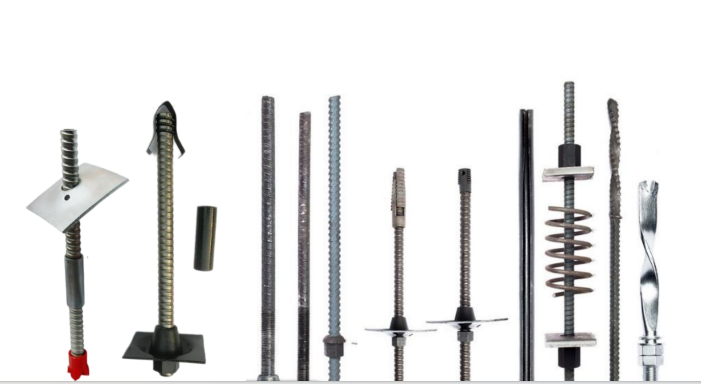
Why Pre-order Verification Matters
The bolt, plate, nut and anchor mechanism work as one system; weakening any component (undersized plate, low-grade material, missing corrosion protection, mismatched thread) can cause pull-out, failure or premature replacement. Pre-order checks reduce mismatch risk, make supplier quotes comparable, and create a clear acceptance basis for the trial and bulk orders. Design load requirements should remain the buyer's engineering responsibility; suppliers supply material and dimensional data against that design.
Match Bolt Type to Ground Conditions
Choose the system according to rock mass quality, roof versus sidewall, expected deformation, whether immediate friction support or long-term bonded (grouted/resin) support is required, and groundwater/chemistry.
- Split-set friction stabilizer: immediate friction support on insertion; strong in competent rock and fast installation, but less reliable in highly fractured or very weak ground and needs corrosion protection if exposed to moisture.wfgroundsupport.comJaxon Heavy Machinery Co., Ltd
- Resin / fully grouted rebar bolt: strong bond after curing; suitable for most rock including weak shales/mudstones where mechanical expansion anchors are unreliable; preferred for more permanent support.
- Self-drilling hollow grouted bar: combines drilling and grouting; suited to broken, soft or collapsing ground where a borehole would not stay open.
- Cable bolt / strand: long, high-strength tension support for deep or wide-spanning roofs.
- FRP (GFRP) bolt: non-corrosive and non-sparking, for corrosive or special environments, but lower tensile strength than steel and limited re-torquing; confirm suitability before use.
- Yielding / energy-absorbing bolt: designed for large deformation, squeezing ground or rockburst-prone conditions, not routine stable rock.ALEKVS Machinery
Confirm Technical Dimensions and Load Parameters
Before comparing prices, fix the engineering values in the enquiry: bolt type and referenced standard, nominal diameter, total and free/bonded length, thread pitch/profile (for rebar/threaded bolts), tube wall thickness (for split-set), drilled-hole and bit size, anchor length, and required yield load, ultimate (breaking) load and elongation. Ask the supplier to quote declared mechanical values with their source test, not only a product name. Dimensional tolerances, straightness and thread accuracy directly affect installation and joint reliability.
Check Matching Accessories
The system should be quoted as a matched set. Verify: bearing (tray/dome) plate size, thickness, shape and center-hole fit; plate capacity compatible with (not weaker than) the matched bolt design demand; nut and hardened washer thread and load rating; resin cartridges (type, fast/slow-set, quantity per bolt) for resin systems; drill bits, couplings and grout tubes for hollow bars; and any mesh/straps the plate must clamp. A common failure is an over-rated bolt paired with a thin, cracked or mismatched plate; Chinese guidance for mine accessories generally requires plates sized around at least 100×100 mm (or Φ100 mm) with capacity matched to the bolt yield load, but exact values must follow the project standard Confirm accessories are included in the price and mark them on drawings
Corrosion Protection for the Service Environment
Match the finish to the environment: plain/oiled or painted steel for dry, short-life service; zinc or other metallic coating where moderate protection is needed; polymer/epoxy coating or FRP for aggressive damp, acidic, brine or coastal conditions. Request a coating type and, when specified, coating-thickness report and adhesion result; do not accept "rust-proof" marketing without evidence. Unprotected split-set and steel bolts in wet mines lose section over time, so corrosion allowance or a protected system should be decided early
Common Buying Mistakes to Avoid
(1) Buying mainly on unit price without mechanical data;
(2) choosing the wrong bolt type for weak, fractured or deforming ground;
(3) ordering bolt without matched plate/nut/resin;
(4) ignoring corrosion in wet or acidic mines;
(5) vague RFQ specs that produce non-comparable quotes;
(6) accepting certificates or strength claims that cannot be traced to a heat/lot;
(7) skipping the trial order and first-batch inspection;
(8) over-specifying unnecessary features and paying extra, or under-specifying the design demand;
(9) mixing finishes or models in one installation without noting the difference;
(10) treating permanent and temporary support as the same procurement standard.
Minimum RFQ Data to Request
In every enquiry list: project/site and ground condition; bolt type; required standard; nominal diameter; total length and anchor/free length; material/grade; declared yield & ultimate load (kN) and elongation; thread or tube wall specification; plate size/thickness/shape; nut/washer/resin/tooling requirements; finish/coating; required documents and certificates; MOQ, target lead time, annual/order quantity; packing and marking; trial/inspection requirement; target delivery port. Ask the supplier to confirm feasibility, provide MTC sample and test report samples, and quote accessories as a system。
Conclusion
Effective rock bolt purchasing is evidence-based and system-based: match the bolt to the ground, require traceable material and mechanical evidence, ensure the plate and accessories are not the weak link, choose the correct corrosion protection, fix documentation and inspection rules before bulk order, and compare suppliers on an identical technical basis. This approach protects safety, reduces repeat work and hidden failure costs, and makes quality claims verifiable
Post time: 2026-11-02 10:57:07
